


Gifting has never been easier
Perfect if you're short on time or are unable to deliver your gift yourself. Enter your message and select when to send it.


Change your baby's nappy at night if it's dirty, very wet, leaking, or your baby seems uncomfortable. If it's only a little wet and your baby is sleeping soundly, it's usually fine to leave it until their next feed or the morning.
Newborns often need a change at most night feeds, while older babies in a well-fitted overnight nappy can often sleep right through without one.
Sometimes. It depends on your baby's age, what's in the nappy and how wet it is.
A dirty nappy always needs changing, even at 3am. Poo sitting against delicate skin is one of the quickest routes to a sore bottom, and Raising Children Network explains that the main cause of nappy rash is a wet or dirty nappy worn for too long.
A wet nappy is more of a judgement call. Disposable nappies are designed to draw moisture away from the skin, so a lightly wet nappy on a peacefully sleeping baby can often wait. Every change is a little wake-up (lights, cool air, being moved around), and baby sleep cycles are short enough already. If your baby is settled and comfortable, letting them sleep is often the kinder choice.
The simple rule: poo means change. Wee means check, then decide.
Newborns. In the early weeks, babies feed around the clock, and what goes in must come out. Pregnancy, Birth and Baby suggests nappies usually need changing every 3 to 6 hours, or whenever your baby has done a poo, so a change at most night feeds is completely normal at this stage. Many parents find it easiest to change the nappy before the feed, so your baby can drift off at the end of the feed instead of being disturbed again straight after.
Older babies. As night feeds space out and sleep stretches get longer, babies usually need fewer changes. Many can go from bedtime to morning in a good overnight nappy, unless they've done a poo. A fresh nappy as the last step of your bedtime routine gives you the longest possible stretch.
Toddlers. Some toddlers poo in their sleep. If you notice it, change it, even if they're still snoozing.
As a general guide, change your baby's nappy at night when:
If none of these apply and your baby is sleeping peacefully, it's okay to let them be. That sleep is doing important work.
The goal is a change that's quick, quiet and calm, so your baby barely registers it happened. Here's a simple step-by-step:
If your baby is waking often for reasons that have nothing to do with their nappy, our guide on why babies wake is a good next read.
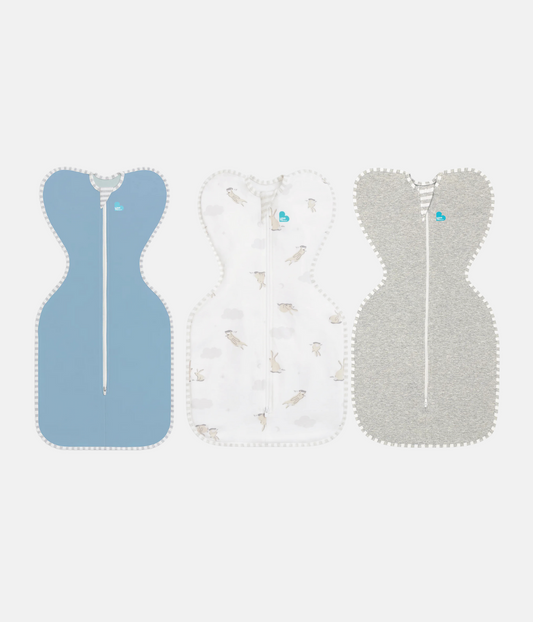
The right sleepwear can be the difference between a 60-second change and a full wake-up. Look for a zip that opens from the bottom, so you can reach the nappy without unwrapping your baby's top half.
Our Swaddle Up™ has a two-way zip designed for easy, quiet nappy changes, so your baby can stay snug in their natural arms-up position while you get the job done. Once your little one has outgrown swaddling, our baby sleeping bags keep night-time dressing simple too.



Usually not, unless it's dirty. If your baby is sleeping soundly and the nappy is only a little wet, it's fine to wait until they next wake for a feed. A dirty nappy is the exception, because poo against the skin can quickly lead to nappy rash.
It happens to everyone. Keep the room dim and quiet, offer a feed or a cuddle if they need it, and use the same settling cues you use at bedtime. Try not to switch on bright lights or start playing, as that signals daytime. Our guide to settling a newborn has more ideas.
They can if they're long or stimulating, but a quick, quiet change rarely throws things off. Changing before a feed, keeping the lights low and skipping unnecessary changes all help protect night sleep. If wake-ups suddenly increase, a sleep regression or growth spurt may be the real reason.
For newborns, usually at most night feeds. Older babies may not need a change overnight at all, as long as they're in an absorbent overnight nappy, haven't done a poo and aren't leaking.
For many older babies, yes. A wet nappy can stay on overnight if it isn't leaking, your baby is comfortable and their skin looks healthy in the morning. A dirty nappy should always be changed.
Check the fit first. The waistband should sit snugly, the leg frills should be pulled out rather than tucked in, and it may simply be time for the next size up. A dedicated night nappy can also help. For baby boys, pointing the penis downwards before fastening helps too.
Changing nappies at night doesn't need to be a big production. Change dirty, very wet or leaking nappies, keep things dim, quiet and quick, and let a lightly wet, sleeping baby sleep. With a little prep and easy-zip sleepwear, night changes become just another calm part of the night.
Looking for more ways to help your little one sleep? Explore more expert guides on our baby sleep blog.