


Gifting has never been easier
Perfect if you're short on time or are unable to deliver your gift yourself. Enter your message and select when to send it.


We recommend starting with three swaddles in your baby's current size: one on, one in the wash and one spare. We call it Wash, Wear & Spare.
Across the newborn stage, the laundry and life as you know it might feel chaotic at first so having an extra swaddle to fall back on, might just be your sanity saver.
Is two enough? It can work if you wash every day, but it leaves no margin for a 3am nappy leak which is always the night you really needed that sleep.
New to swaddling? A swaddle gives your baby a snug, womb-like feeling and helps calm the startle reflex that can jolt them awake. Our guide to what swaddling is covers the basics.
Think of three as your starting point. These four things nudge it up or down.
Washing daily? Three or four will do. Washing once a week? You'll want six to eight. Fair warning: almost every new parent underestimates how much washing one small person creates.
Some babies spill after every feed, some barely at all, and nappy leaks happen to everyone. Spilling is common in the early months and usually settles as babies grow. If your baby spills a lot, add one or two extras to your three.
A summer baby needs a lighter swaddle first and a warmer one as the weather cools (and the reverse for a winter baby). Swaddles are labelled by TOG, so you can match them to the room rather than guessing by feel. One cool and one warm option per size covers most homes. New to TOG? Our TOG guide explains it simply.
Out and about a lot? Keep one swaddle permanently in the nappy bag. Expecting twins or more? Double the baseline: three each, per size.
Size by weight, not age. Babies grow at very different rates, so a weight range is a far better guide than the month on the label.
Don't stockpile the newborn size. Some babies wear it for a few weeks, and some arrive ready for Small. Each time your baby sizes up, the count resets to three.
Sizing isn't standardised between brands, so always check the weight range rather than the age. Most families need about two sets of swaddles before moving on to a transition swaddle. Our Swaddle Up™ size guide has every size, including Tiny for smaller babies.


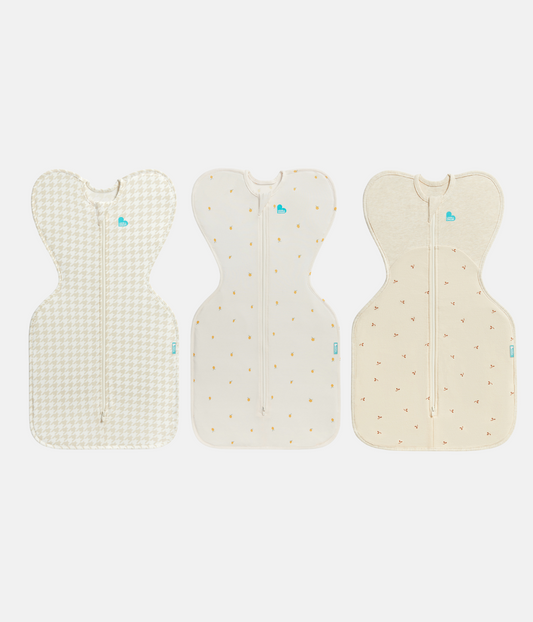

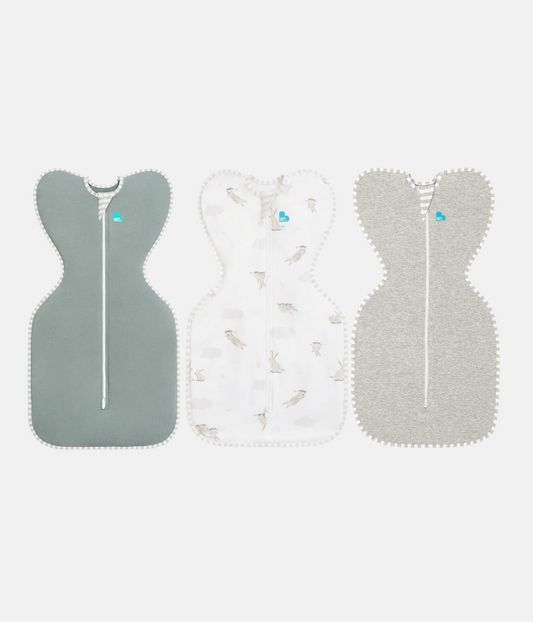
Two to three. That's fewer than you might expect, because most hospitals supply wraps. You're really packing for comfort, familiarity and the trip home.
Add one extra if you're planning a longer stay or recovering from a caesarean. And pop in a couple of muslins: they double as a burp cloth, a feeding cover and an emergency change mat.
Fewer than you'd think. The swaddle is a layer itself, so dress your baby lighter underneath than your instincts say.
Then match the swaddle's TOG to the room:
To check your baby is comfortable, Red Nose suggests feeling their back or tummy. Cool hands and feet are normal. Keep their head and face uncovered, keep the cot free of loose blankets and rugs, and never use a weighted swaddle or sleeping bag, which Red Nose does not recommend.
A correctly rated swaddle takes the guesswork out of layering. Our guide to dressing your baby under a swaddle has more outfit ideas.


Swap to a fresh one when it's:
The more of these your days include, the more swaddles you'll want in rotation. Wash new swaddles before their first use, and follow the care label so they stay soft and keep their shape.
Not necessarily, but it helps to know the two main styles.
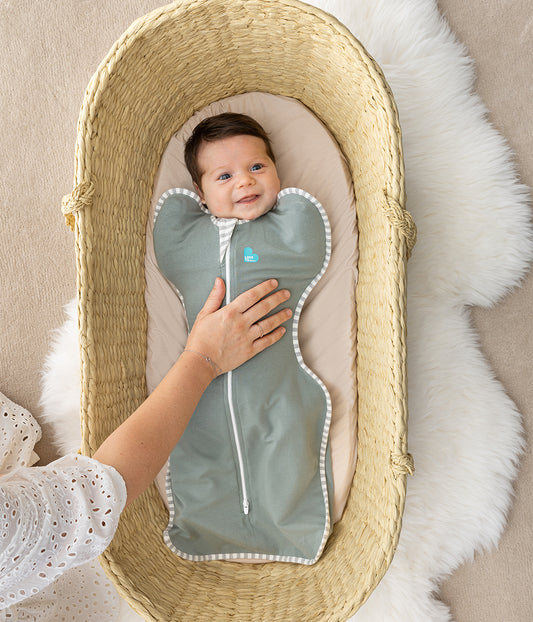
If your baby fights having their arms down, you're not alone. Many babies naturally bring their hands up to their face, which is exactly why we designed the Swaddle Up™ with an arms-up position. Arms up isn't arms restrained: your baby still feels snug and secure, with their hands near their face to self-soothe.
Think of this as a checklist, not a shopping list.
A swaddle should be firm across the chest but never tight around the hips and legs. Red Nose notes that tight wrapping with the legs straight and together can affect healthy hip development, so your baby's knees need room to bend up and out. Quick fit check: their chest rises and falls normally, and the neck opening sits snugly without riding up towards their mouth.
Breathable fabric helps your baby stay comfortable and is kinder to sensitive newborn skin. A swaddle that dries quickly also means you need fewer in rotation. And the honest truth: the best swaddle is the one you can do up half-asleep, in the dark, with a wriggling baby.
Stop swaddling as soon as your baby shows any signs of trying to roll. That's the signal that matters, not a birthday, and the age varies a lot from baby to baby. Red Nose also advises stopping wrapping once rolling begins.
Next comes an arms-free transition stage, then a fitted sleeping bag. Your muslins won't go to waste either: they make great burp cloths and change mats for months to come. For more on timing, read when to stop swaddling your baby.
Three in your baby's current size is the sweet spot: one on, one in the wash and one spare. If you wash weekly rather than daily, aim for six to eight across the newborn stage. Remember the count is per size, so you'll need a fresh three when your baby moves to the next one.
Add three swaddles in the newborn size, or a newborn bundle, plus a couple of muslins. That covers one on, one in the wash and one spare from day one. Friends and family love a practical gift, and it means one less thing to sort when you're running on very little sleep.
Three is plenty. Choose by weight rather than the age on the label, because babies grow at different rates. Many babies outgrow the newborn size within weeks and move up before the three-month mark, so three per size keeps you covered without buying too far ahead.
Two to three is enough for most hospital bags. Most hospitals supply wraps, so you're packing for comfort and the trip home. Add an extra if you expect a longer stay or are recovering from a caesarean, and throw in a couple of muslins for spills and burps.
No. Swaddling is a settling tool, not a requirement. Many families find it helps newborns feel calm and secure, but every baby is different, and if yours sleeps well without it, that's completely fine. Whatever you choose, stop swaddling as soon as your baby shows any signs of rolling.
Yes, if it's done correctly. Always place your baby on their back, use a breathable swaddle that suits the room temperature, keep their head and face uncovered and don't overdress them underneath. Leave room for their hips and legs to move, and stop swaddling once they show any signs of rolling.
Looking for more sleep support? Browse all our baby sleep articles.


